The freedom to read doesn’t exist without the freedom to write
The following essay was first shared with my newsletter on Oct. 7, 2026, during Banned Books Week. To receive my posts in your in box before they are posted online, subscribe to my newsletter.
Since summer 2025, I've been working with Massachusetts Authors Against Book Bans and the Mass Freedom to Read coalition to advocate for the passage of An Act Regarding Free Expression, which is Massachusetts' freedom to read bill. It finally passed in August 2026. This is the story of how it happened and some of the lessons I’ve learned from my experience.
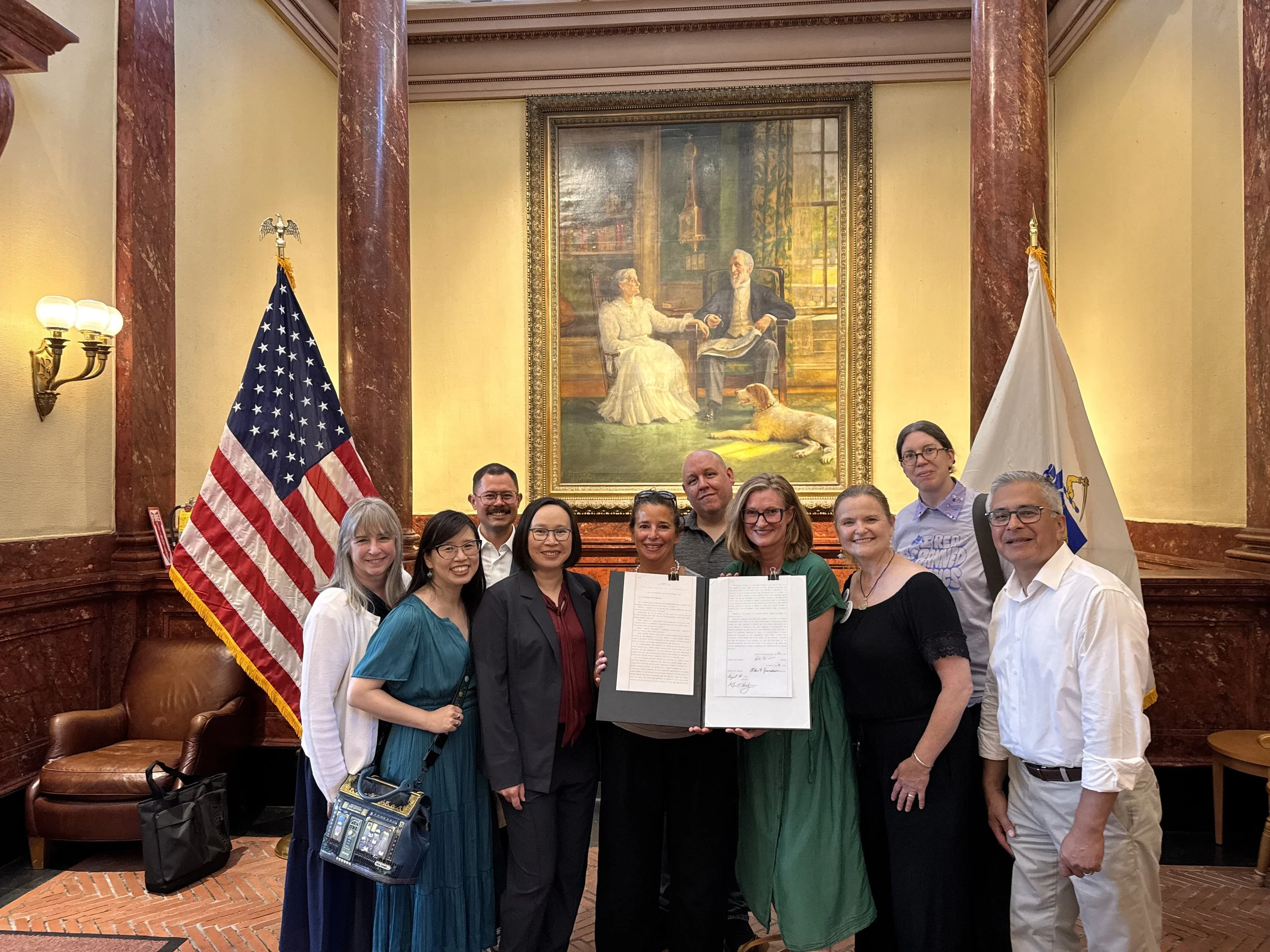
Photo: At the Franklin Public Library in Franklin, MA, on Aug. 10, 2026, several authors gathered together with members of the Mass Freedom to Read coalition to celebrate the signing of An Act Regarding Free Expression. Left to right: Heidi Stemple, Grace Lin, Mike Curato, Malinda Lo, Dana Alison Levy, Nicholas La Rue, Andrea Fiorillo, Michelle Cusolito, Gina Gagliano, Federico Erebia.
How This Bill Became Law: An Abbreviated History
I advocated for this bill for fifteen months, but the bill was actually first filed in the Massachusetts legislature way back in 2023. When my novel A Scatter of Light won the Massachusetts Book Award that year, I even mentioned the bill during my acceptance speech at the State House and called for legislators to support it. However, that shout-out did nothing because I was one person tilting at windmills.
This early version of the bill didn’t make it to a vote during the 2023-24 legislative session. (Some inside baseball here: Apparently the Massachusetts legislature is notoriously slow at passing bills. Despite the fact that it is one of the few state legislatures in the nation where legislators work full-time, and legislative sessions last for two full years, it can take decades for bills to pass. The fact that An Act Regarding Free Expression passed in only three years is quite remarkable. I'm not sure the timeline is something to brag about though.)
Meanwhile, book bans continued to skyrocket across the United States — and in Massachusetts. The bill was refiled in the Massachusetts legislature in January 2025 in a slightly modified form. In June 2025 I banded together with publishers, Massachusetts libraries, booksellers, and my fellow authors to form Mass Freedom to Read, a coalition with one goal: finally get this bill passed.
The bill did pass in the Massachusetts Senate in November 2025, but it did not pass in the House until June 2025 — seven months later. Then, because the Senate and House bills were different, the two versions had to be reconciled. The deadline for reconciliation was July 31, because that's when the formal legislative session ended for the year.
The bill was formally passed on the last possible day: July 31, 2026. Those legislators seem to love hitting deadlines on the nose.
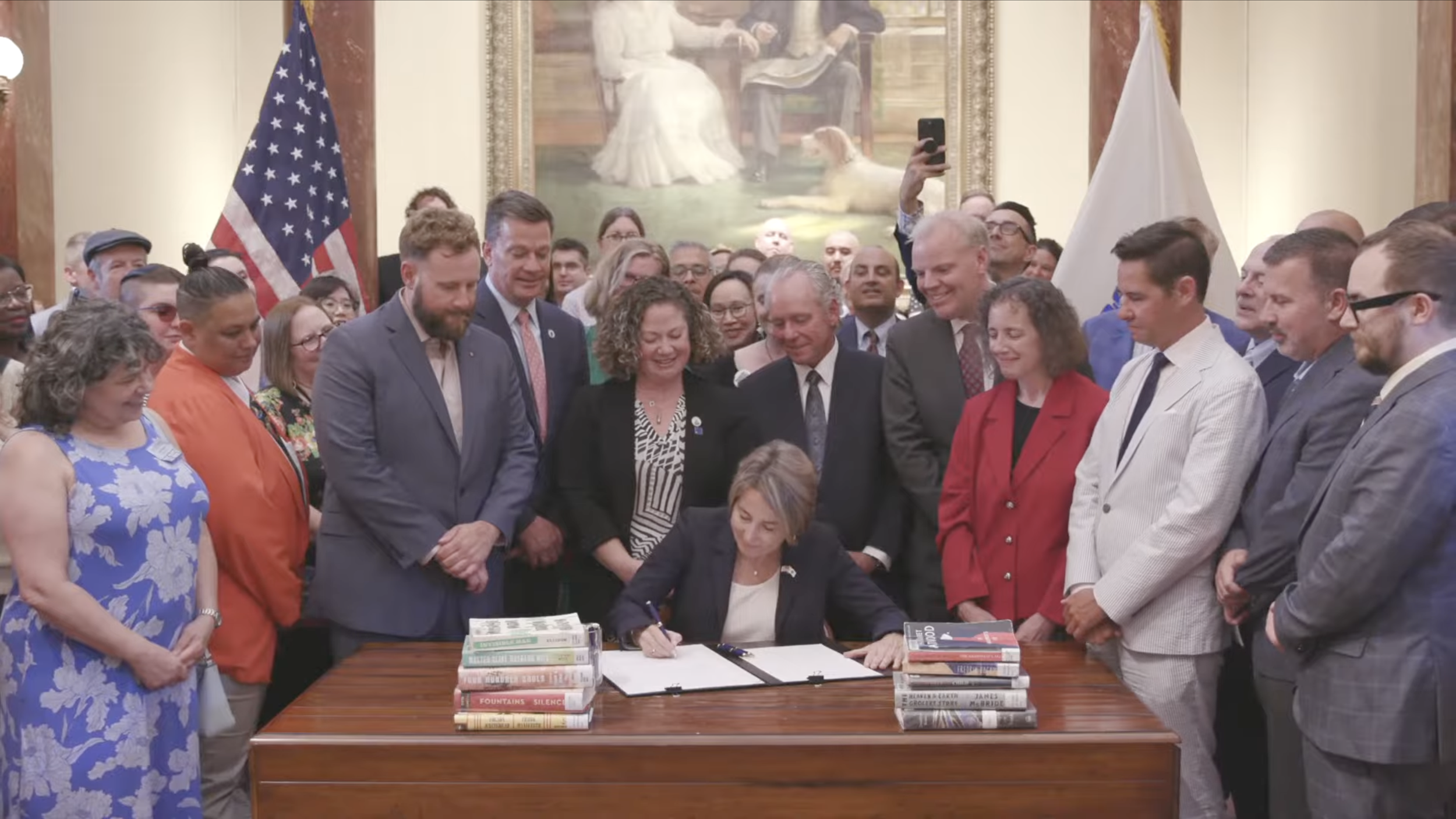
But wait, it's not over yet! The governor of Massachusetts then had 10 days to sign it and turn the bill into a law. At this point, we were quite hopeful that Governor Maura Healey would sign it, but there were no guarantees. New York's state legislature passed a freedom to read bill last year, but their governor vetoed the bill. When Governor Healey announced she would be signing the bill on August 10 (again: the last possible day!), I was incredibly relieved.
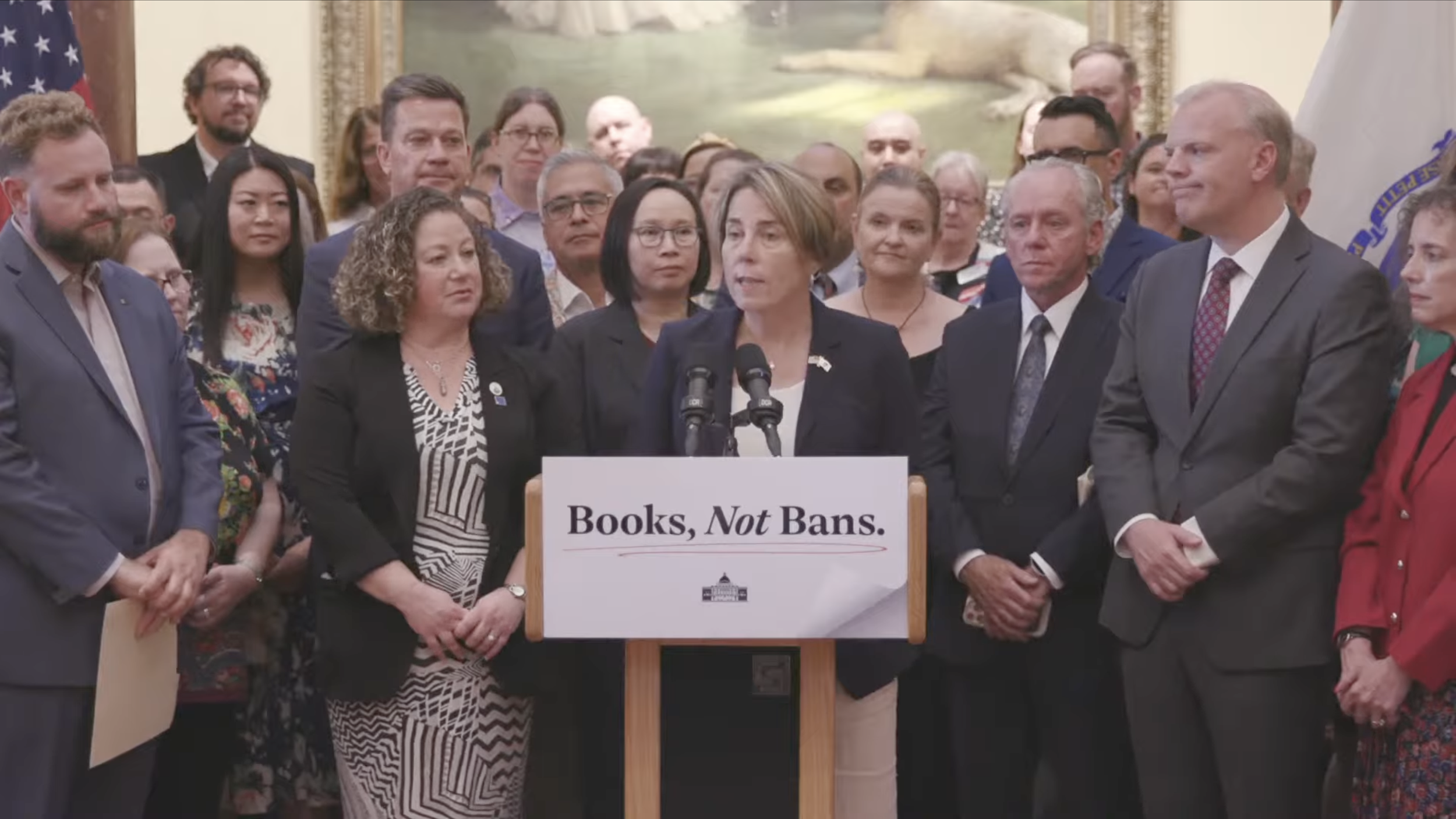
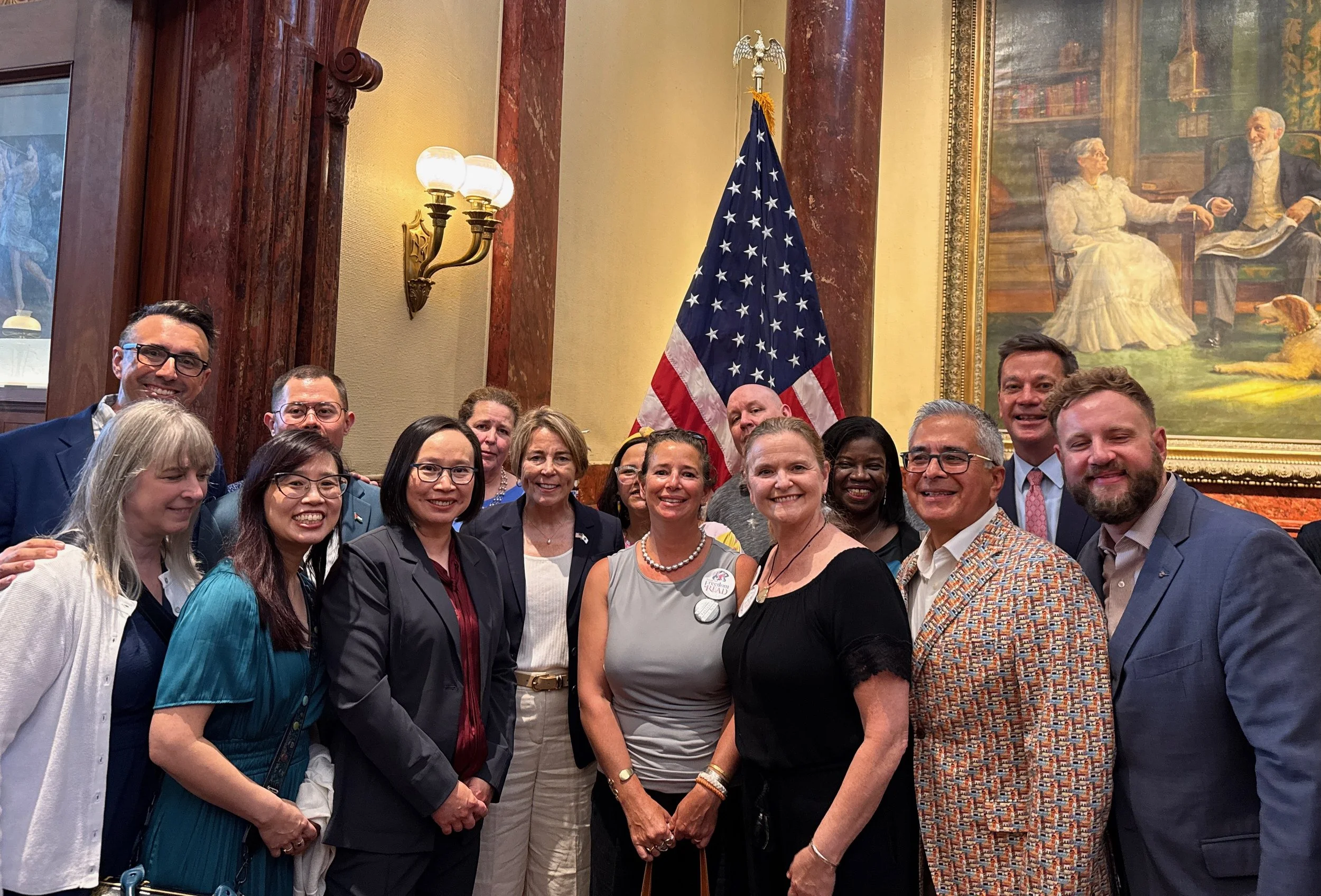
I and my fellow Mass Freedom To Read compatriots were all invited to the governor's signing of the bill at the Franklin Public Library, the first public library in Massachusetts, which holds a collection of Ben Franklin's own books. I was truly honored to be invited to stand directly behind the governor, alongside Michelle Cusolito, fellow writer and Mass AABB co-leader. Many more authors and coalition members were gathered right behind us.
You Can’t Always Get What You Want
It was absolutely wonderful to see this bill become law, but the triumph was bittersweet for authors because we didn't get everything we want.
Nonetheless, the law is definitely a good one and includes several clauses that we at Mass Freedom to Read specifically asked for. It stipulates that books can only be challenged in a school district or public library by those who are enrolled in the local school district (students or their parents) or who live in the community served by that public library. That prevents outside agitators from coming in and challenging hundreds of books at a time. The law also requires challenged books to be considered in their entirety, rather than only through cherrypicked passages. This prevents books from being banned due to isolated paragraphs or illustrations stripped from their context.
Authors did achieve one of our goals. The law states that the author of a book banned in a Massachusetts public library may challenge that ban in state court. But the law doesn't include this right for authors in school districts. That means that for authors, if their books are banned in a Massachusetts school district, the only recourse is to file suit against the school district in federal court, relying on our First Amendment rights. This is what authors have done in many states already. (I have been in two lawsuits, in Iowa and Idaho, that do this.) The problem is, this is a much more expensive and time consuming process than a state-level appeal to a ban — for both authors and school districts.
We at Mass AABB and Mass Freedom to Read had hoped that authors would be included in the bill regarding book bans at both public and school libraries. In June, when the bill passed the House, we learned this might not happen because the House bill did not include authors at all. We learned that some House members were skeptical that authors should be included, and they were also being lobbied by parental rights activists who didn't like any part of this bill.
During the reconciliation process (when the House and Senate bills were aligned), there was every possibility that authors could be cut out entirely. I'm relieved that authors' rights managed to survive in public libraries, at least. But this process underscored something that I've become increasingly aware of during the last five years of fighting censorship: Most people do not believe that authors are affected by book bans.
Remember: Human Authors Write Books
This issue came up during meetings with legislators when they seemed puzzled by why authors were in the room at all. When they think of authors — which isn't often — I think they believe we're all wealthy, New York Times-bestselling novelists. That isn't true, of course. Most authors are struggling small businesses, and when our books are banned, we feel that impact directly in our bank accounts through lower royalty payments. Authors of banned children's books feel that even more acutely through canceled or declining paid school visits. (I'm not even getting into the harassment and death threats that many authors receive due to book bans.)
When I spoke to legislators about authors as small businesses, I saw them suddenly take notice. This is because most legislators (and probably most of the public) don't understand artists, but they do understand small businesses.
This misconception of authors is one reason we had so much trouble persuading legislators that we deserve to be protected by anti-censorship legislation, but I see another roadblock, too. For decades, the fight against censorship has been framed as the fight for the "freedom to read." When I first became aware of this framing many years ago, I remember being confused by it, because it was the inverse of what I thought was actually happening. Book bans censor writers, and censorship curtails our First Amendment rights to freedom of expression.
The "freedom to read" is a slogan and a rallying cry that has evolved out of litigation and activism, because it has largely been libraries and schools who have fought the battles against censorship over the past century. Libraries and schools do not represent the authors whose books are banned; they represent the readers who are denied access to the books. This is why they talk about the "freedom to read" rather than the "freedom to write."
Authors have generally not had the money to fight these legal battles, and they also haven't been organized to fight back collectively until very recently. Authors have been involved in censorship battles, of course, but I believe we have typically been involved more as figureheads. We are the "celebrities" that can generate interest in a cause, but rarely more than that. You can see this in the way authors have been incorporated into the most recent battles against censorship.
For example, I have often been invited to speak about book banning. I often encounter expectations that I will talk about how libraries and librarians face harassment for fighting censorship, and how readers will suffer if they aren't given access to books like mine. But I am rarely if ever expected or invited to speak about how censorship affects my creative work or authors in general. I speak about it anyway, but I have felt — over and over — that my speaking about it is unexpected, and even confusing.
I think it is confusing because much of the language around censorship sidelines authors. This is perhaps inadvertent, but it has a real effect. The "freedom to read" implies that reading exists completely separately from writing, when in fact there would be nothing to read if authors didn't have the freedom to write.
This year's Banned Books Week theme was "Let Books Be." When I first heard this I was greatly puzzled. Books don't exist without writers to write them. Books don't spring forth fully formed from the ether — or even worse, from a generative AI model. The rise of generative AI, combined with this language that elides authorship, makes me feel more strongly than ever that we must do more to include human authors in the fight against censorship.
But to be honest, I don't know how to do this. Libraries do important anti-censorship work and have been doing it for a long, long time. I simply can't see them moving away from the "freedom to read," which is politically useful and has become a motivating rallying cry. But the freedom to read is inextricable from the freedom to write, and I hope that in the future, writers' voices can be amplified in this battle in ways that do more than use us as talking heads.
Book Bans Are a First Amendment Issue
The reason I got into this fight in the first place is because I understood immediately that it was a First Amendment issue. I understood this because my family came to America from China, which does not allow freedom of expression. My family in China faced direct political oppression due to their beliefs and statements. If I still lived in China, my books would probably never have been published. The fact that my books (particularly Last Night at the Telegraph Club, which even has a storyline about McCarthyism) are now banned so widely in parts of the United States of America is appalling to me.
Many people in blue states, including Massachusetts, don't believe this fight affects them. But the First Amendment is for all of us. Book banning is only one tactic to strip us of those First Amendment rights. You've seen our government imprison people for writing op-eds. You've seen our government silence protestors by killing them.
In my fantasy, Banned Books Week would be about standing up for the First Amendment. It would be about taking action to defend our freedom of expression, which includes my and other writers' freedom to write, the freedom to read, and even your freedom to say whatever you want on the internet — or at a protest. I believe that's why the Massachusetts bill I advocated for was titled "An Act Regarding Free Expression" and not "An Act Regarding the Freedom to Read." Although some of the legislators did not quite understand why authors deserved to be protected by that bill, they nonetheless did understand that the bill was in defense of the First Amendment and our right to free expression.
So even though I didn't get everything I wanted in that bill, I'm proud to call Massachusetts my home. I'm so proud of our Mass Freedom to Read coalition, and I'm especially proud of my fellow Massachusetts Authors Against Book Bans (shout out to Michelle, Nic, and Dana especially!) who worked so hard for 15 months to get this bill passed. We did it!