Checking in on queer books this Pride month
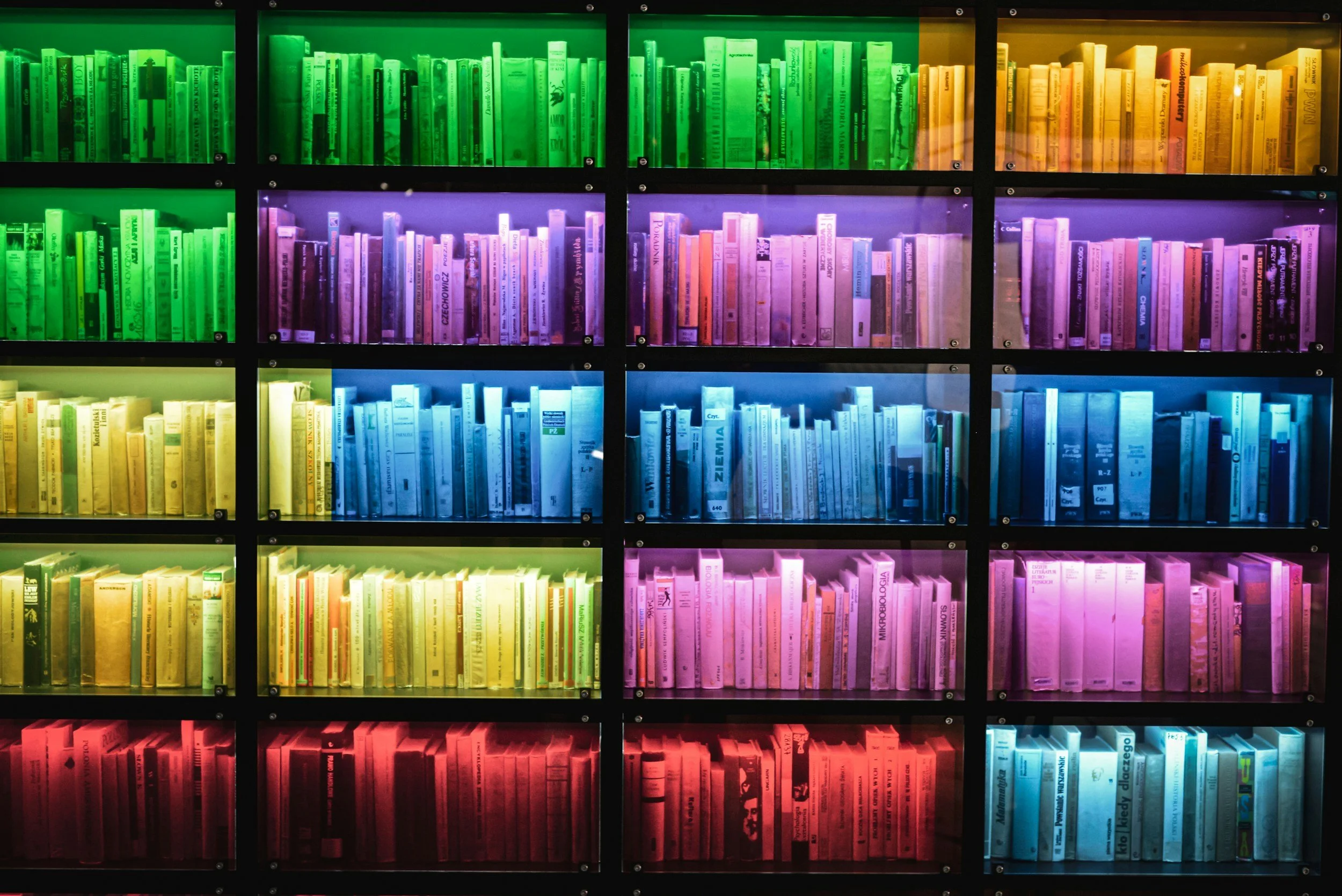
Last week, Book Riot published an article by Danika Ellis titled "Queer Books and Authors are at a Breaking Point." Ellis writes: "I’ve noticed a trend in the news stories coming out about queer books and authors: it’s clear that five years of unrelenting and escalating censorship has brought us to a breaking point." The article quotes a variety of sources, including other news reports, agents, and authors, who all report that the current crisis of censorship in the US has made publishing LGBTQ+ books much more difficult.
For instance, literary agent and author Rebecca Podos told The Hill: "This is the first year in like a decade that I’ve had [rejection] responses from editors specifically citing that it’s difficult to place queer books in stores, and they’re being selective about acquiring queer stories."
Given all the work I've been doing to fight book bans, and my own experiences with having my books banned, this doesn't come as a surprise to me. I don't doubt what is reported in these articles about how censorship has affected the publishing of queer books. But I also want to offer a slightly different take on the current situation — one that brings in the broader historical context.
•
My first YA novel, Ash, was published in 2009, in a year when only 27 books about LGBTQ characters or issues were published. (This was a totally normal number at the time.) In the 2000s, the question was not whether a queer YA book would be banned in schools (people assumed it would be), but whether it could even get published by a mainstream publisher. It was widely understood that queer stories were risky because schools and libraries would likely shy away from them, and because schools and libraries are a huge part of the children's and YA market, it was a big risk to publish books that didn't sell into those markets. It required agents and editors willing to take big risks to publish my novel Ash and every other LGBTQ YA book in the 2000s and earlier.
When I started out in YA, I soon learned that many children's and YA authors earned much of their income from paid school visits. However, I very rarely received any school visit invitations. At least once, I was invited and then un-invited, and no reason was provided. Today, many authors would question why. Back then, I didn't think it would be worth it to ask.
I remember going to a convention in the early 2010s and talking with another queer author of children's books, along with someone who worked in school and library marketing. They both told me that schools simply did not invite queer authors or authors of queer books to their schools. This was well-established fact to them, and though it was new information to me, it was not surprising. After all, I grew up in the 1980s and 90s when being LGBTQ was not culturally acceptable. My childhood occurred during the AIDS crisis. I grew up understanding that if I were to come out, I would probably face negative consequences. The idea that schools wouldn't invite queer authors to speak to their students didn't seem unusual to me at all; it seemed absolutely normal.
Of course, none of this made the clear and blatant homophobia okay. It was just part of being a queer person in the world. At the same time, plenty of queer people were resisting this homophobia in many ways: through activism, through coming out to their families, through living their lives openly and without shame.
Although Ellen Degeneres has largely fallen from grace these days, when she came out in 1997 on prime time television, it was a national event — and she did pay a price for it. Probably few people remember this now, but after Ellen came out, her TV show was canceled and she lost her job. She ultimately landed on her feet, but it still sent a clear message that coming out was a risk.
•
By the time my debut novel was published in 2009, being openly LGBTQ was totally fine in some parts of the US, including San Francisco, where I lived. It was not fine in other parts of the country, including Texas, which happens to be one of the largest school and library markets in the US.
I remember talking with a fellow Asian American writer early in my career who told me that I would probably soon be invited to the Texas Library Association's annual conference, and my books would likely get on their annual state lists, which were great for sales. She told me this because my debut novel was a finalist for five awards, including the American Library Association's William C. Morris Debut Award. It seemed likely that it would be included on plenty of state lists.
But in my seventeen years of experience in publishing, none of my books has ever been on a Texas state list — except for the one by Texas state representative Matt Krause that attempted to ban 800+ titles. Although I've been invited to Texas for book festivals, I've never been invited to the Texas Library Association's convention.
But you know what? I survived. My debut novel wasn't a runaway success but it sold enough to enable me to sell two more books. At the same time, I began to be actively involved in the YA book world. In 2011, I started counting the number of LGBTQ YA books being published each year after a writer posted about an agent asking them to de-gay their book. My friend and fellow author Cindy Pon and I launched a book tour and website called Diversity in YA, where we celebrated the small number of books about people of color and LGBTQ+ people that were published. Though most people may not remember it today, for a few years in the 2010s, Diversity in YA made a difference.
Then in 2014, We Need Diverse Books was founded, and it has gone on to have a huge impact on children's and YA publishing. Around the same time, in 2013 the Supreme Court ruled that the Defense of Marriage Act was unconstitutional, and in 2015 the Supreme Court legalized same-sex marriage across the United States. I think that these decisions also opened the door to wider acceptance in YA for queer books.
•
From 2015-2020, queer YA really took off. I felt this most personally as an author of books with queer characters, because the queer YA community expanded exponentially — from authors to readers and everyone in between. In 2009, it was possible for me to know almost every other queer YA author in publishing, because there were only a handful of us. After 2015, that changed, and I was no longer the only queer YA author at a YA book event. Suddenly, there were entire book festivals focused on queer YA. I had to stop counting the number of queer YA books being published because it had risen so much that I couldn't keep up.
I did wonder when the upward trend of queer YA would taper off. I did wonder if there would be a conservative backlash to what seemed like a triumphal queer moment. I didn't have to wait long to find out.
The backlash began during the Covid pandemic in 2020 when parents became intimately involved with their kids' schooling because everyone was at home. Parents who organized against mask mandates also began to organize against books they did not like — particularly those about trans characters, and then books with so-called critical race theory, and on and on until we reached the state we're in today: thousands of books being challenged all at once for vague reasons by a few individuals who are part of organizations like Moms for Liberty.
So yes, a decade ago, things were different. But a decade ago was 2016: on the upslope of a spectacular rise in queer YA books. Before 2016, it was another world — and it feels like that world is coming back.
As literary agent Jim McCarthy told School Library Journal, “The publishers used to be pretty open about saying things like, ‘Oh, we already have a gay book, so there’s no room for another one next year.’ ... Then that changed. We saw a really incredible growth from publishers in terms of what they were willing to publish.... But in the past couple of years, I’ve felt a bit of a retraction.”
That's what we're in now: a bit of a retraction. I don't mean it's not a serious sign. The reason for the retraction is the rise of fascism in America, so it is very serious. But as someone who was writing queer YA before the rise of it the second half of the 2010s, I want to remind you that it wasn't long ago that queer YA was seen as a huge risk — so risky that barely a couple of dozen queer YA books were published each year.
The state of queer YA now in 2026 is far better than it was when I started my career as an author in 2009. We do have to fight to retain the progress we've made, but that's not new. The fight to be seen and accepted as LGBTQ people has been going on for decades before I was born and will likely continue for untold decades to come. The only thing we can do is lend our voices to this battle while we are here, right now.
•
Back when I was about to go on submission with my debut novel, Ash, many queer friends assumed I would be submitting it to lesbian and gay publishers only, because they also assumed that a mainstream commercial publisher would never publish a lesbian Cinderella retelling. But at the time, I was working at a nascent website called After Ellen that covered the representation of lesbians and bisexual women in entertainment. I knew, from working at that website, that millions of us queer people existed in the world, and we were all starved for representation of ourselves on TV and in movies and books. I knew that an audience existed for my lesbian retelling of Cinderella.
Right now in 2026 we are in a difficult time for queer stories and queer authors. That's true. But that audience I believed in before I got published — the queer audience — is bigger and bolder and louder than ever. And as more media is made about queer folks, it becomes increasingly clear that straight people will consume stories about us, too. Good stories are good stories, no matter who they're about.
So even though things are tough right now, don't forget that there are a lot of us out there who love queer books. We need to show publishers, libraries, and our communities that we're here. We can do that by continuing to read and buy queer books, and by talking about them on social media and in the real world.
There are other actions we can all take, of course, to fight book bans and censorship, but I think it's important — especially since this is Pride month — to remember how reading queer stories fulfills us, how they make us happy or feel connected to our community, or how they reveal our deepest selves. Let's take the time to celebrate how much progress we've made, and let's not lose sight of the fact that we are part of a long and continuing push for acceptance and representation. We can do our part right now, just as people before us have done their part, and people who come after us will carry on.
And if you feel like you are at a breaking point in this struggle, take some time to step away and regroup. Go recharge yourself by by re-reading your favorite queer books or by being in queer community during Pride. Remember that none of us are alone in this; we're all in it together. This Pride month, let us all be galvanized to continue being who we are and creating art to express it. Happy Pride!