An update in the fight for freedom of expression
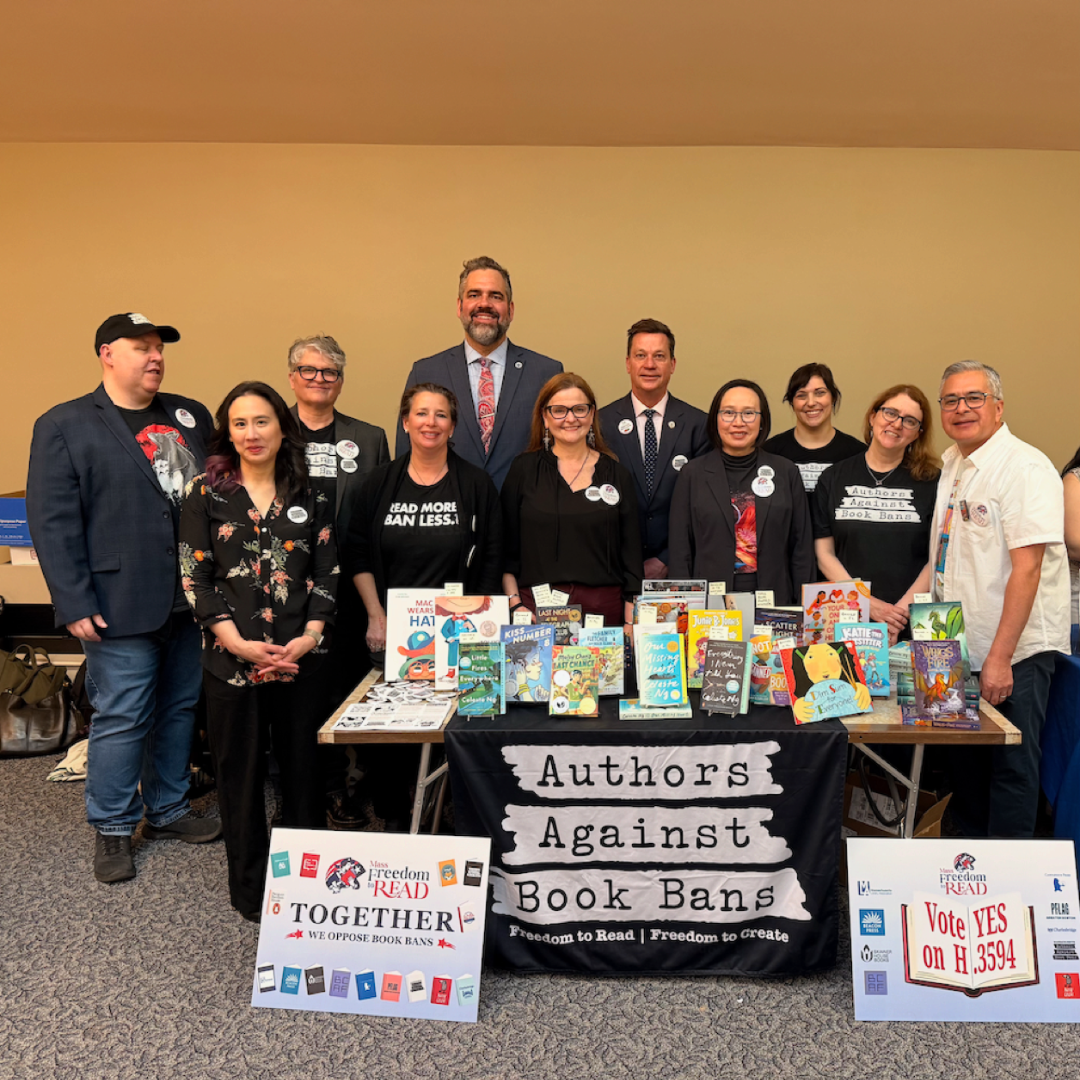
At the Authors Against Book Bans table during our Mass Freedom to Read Book Fair, from L to R: Nic LaRue, Celeste Ng, Vicki Johnson, Dana Alison Levy, Rep. Mike Connolly, Michelle Cusolito, Rep. John Moran, Malinda Lo, Colleen AF Venable, Tui Sutherland, and Federico Erebia.
Last month, I participated in the Mass Freedom to Read Advocacy Day at the State House in Boston, where members of our coalition met with legislators to try to push our freedom to read legislation forward.
We began planning for this advocacy day in January, which didn't give us a lot of time, but we wanted this day to take place in the short window we had before the state legislature turns its focus to the budget in April/May. We were advised that once they start work on the budget, there will be no room to consider our bill, H.3594 (An Act Regarding Free Expression). It took a ton of work to put this advocacy day together, and up to the morning of the event I was afraid we wouldn't be able to pull it off. There were so many balls in the air, and it didn't feel like there were enough people to catch them.
But amazingly, everything came together at the very last minute, and our coalition members turned out in full force. We had a book fair inside the State House, where we gave away books written by Massachusetts authors that have been banned. We held a press conference with remarks from coalition members as well as the sponsors of the bill, and we heard a lot of support from legislators.
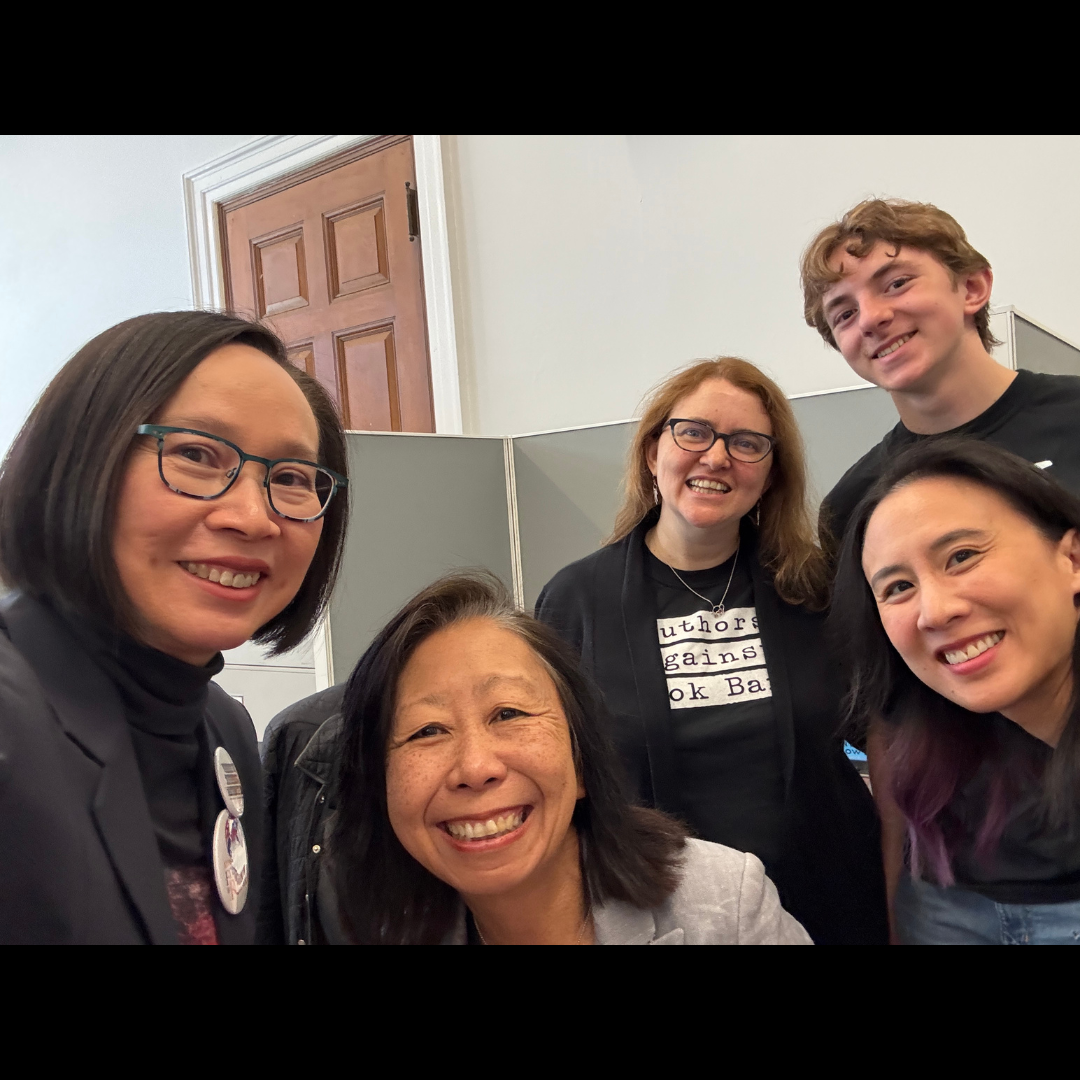
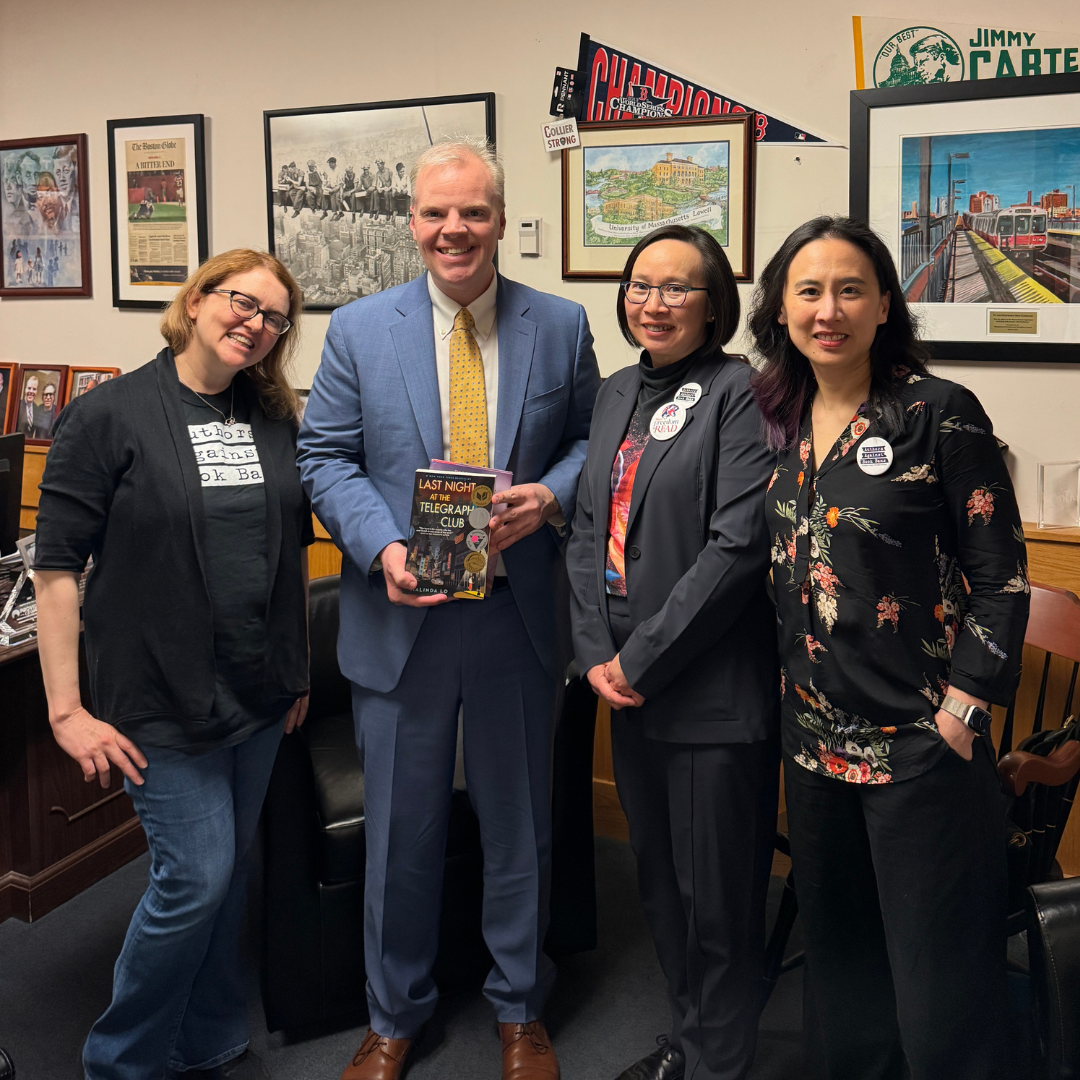
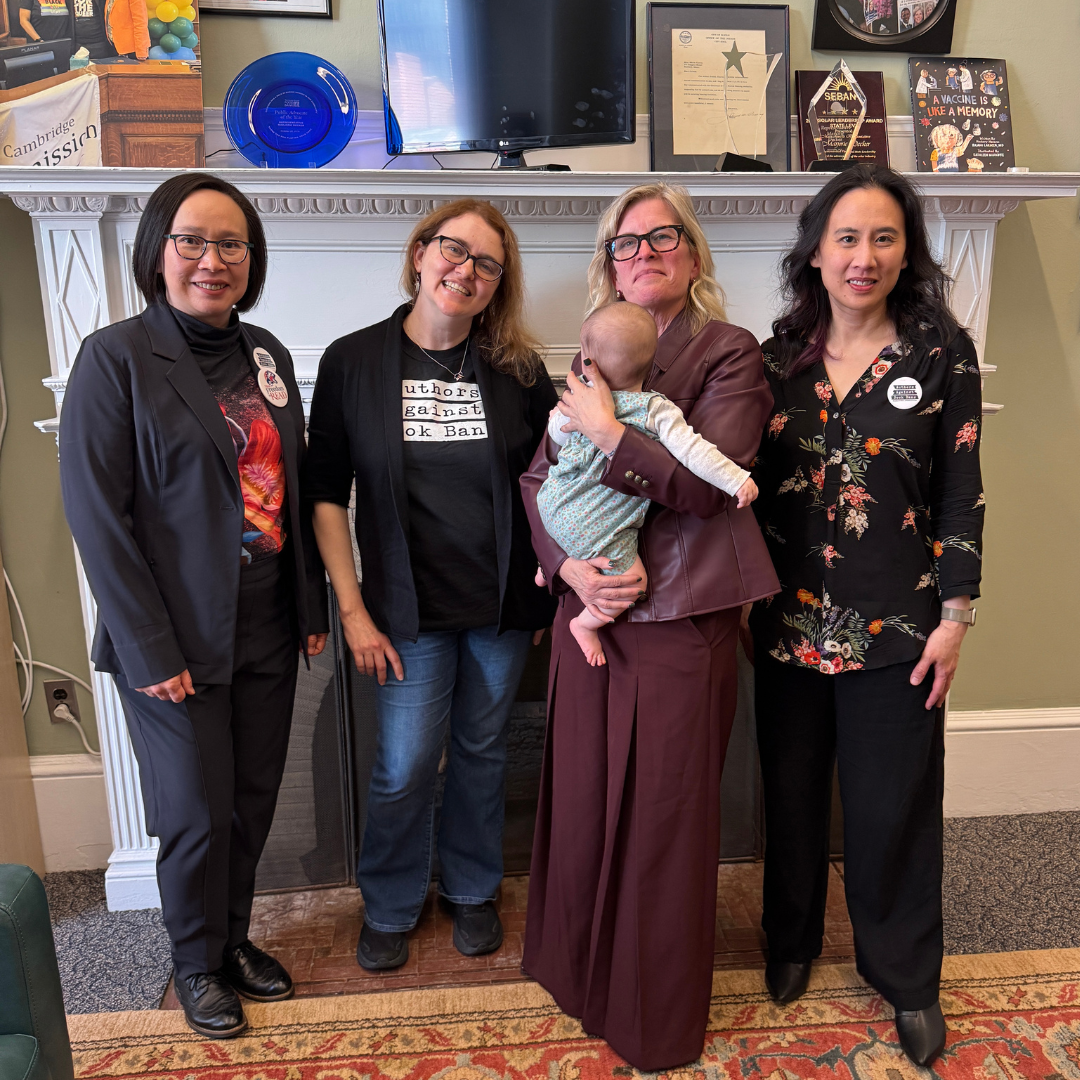
We also had a full day of meetings with legislators and their staffers. We divided up into teams to meet with legislators, and my team consisted of me and fellow authors Celeste Ng and Tui Sutherland. We met with Rep. Amy Mah Sangiolo (Meeting #1), Rep. Sean Garballey (Meeting #2; he is also my local rep), and Rep. Marjorie Decker (Meeting #3). For our meeting with Rep. Sangiolo, we were joined by high school student Jonah Sterns who delivered postcards from his classmates in support of H.3594.
However, all day we were reminded by those same legislators that they have many, many bills to consider. Each bill is important to someone, and they are all fighting for time and attention. This was particularly apparent during the advocacy day, because several other organizations were also having advocacy days at the State House at the same time. I learned that one reason it takes so much effort to get these freedom to read bills passed is that there are so many other bills also fighting to get passed. Not all of them will get through. Our legislators need to hear from us, their constituents, to learn which bills we believe are most important.
During the advocacy day, I spoke to several enthusiastic staffers and legislators, but I also spoke to one staffer who surprised me. They came to our Massachusetts Authors Against Book Bans book fair table and commented that they didn't understand why this bill existed, because the US already has the First Amendment, and First Amendment law is clear and well understood.
It took me a moment to realize that this staffer did not fully support H.3594. I'm not sure if they were actively against it, but they certainly didn't believe it was important, because they believed the First Amendment provided plenty of protection against censorship.
I think this attitude is also common among many people in the US. For years now, I've been trying to raise the alarm about violations of the First Amendment by book bans, but very few people seem to hear me. And yes, the First Amendment exists. But I'm not entirely sure that First Amendment case law is as settled as this staffer believed. (Here is a list of notable First Amendment cases.) For one thing, the First Amendment is being repeatedly and routinely violated right now in many states in multiple ways beyond book bans.
Other recent First Amendment violations include the intimidation and imprisoning of activists like Mahmoud Kahlil; the detention of Rumeyza Ozturk for writing an op-ed; the firing of Stephen Colbert; the temporary silencing of Jimmy Kimmel; and the harassment and murder of protesters in Minneapolis and St. Paul. These are all First Amendment violations that have already occurred.
If you haven't read it in a while, the First Amendment is very brief:
“Congress shall make no law respecting an establishment of religion, or prohibiting the free exercise thereof; or abridging the freedom of speech, or of the press; or the right of the people peaceably to assemble, and to petition the Government for a redress of grievances.” [source]
"Congress shall make no law" — and yet Congress is now attempting to directly abridge the freedom of speech with the introduction of House Resolution 7661. This bill would prohibit federal funds from being used in public schools and libraries that contain "sexually oriented materials." This is unlikely to pass the Senate, but given the state of our nation's politics right now, I can't be sure. It is already moving forward to a vote in the House.
I am not a lawyer, but I have been following this stuff for five years now, and in my opinion, this law is a clear violation of the First Amendment. However, HR 7661 follows the same path that many states such as Florida, Texas, Iowa, and Idaho have blazed in prohibiting books with "sexually oriented materials." These state laws claim to protect children in schools, and although I believe this is a specious argument, several conservative courts have ruled in favor of them.
Earlier this week I learned that the Eighth Circuit, which oversees Iowa and the lawsuit against Iowa's SF 496 in which I'm a co-plaintiff, ruled that SF 496 (which has already been blocked twice) is actually fine. This is a terrible decision for our case. Although we aren’t giving up, I’m not sure how successful we will be.
What this tells me is that attacks on the First Amendment through state laws that encourage banning books with "sexually oriented material" are going to continue. I don't think the First Amendment is as established as that staffer believes.
I hope that Massachusetts legislators will take the opportunity they now have before them to protect the First Amendment in our state. I have no idea what would happen to state-level freedom to read laws if the national HR 7661 actually passes, but I'd like to at least have a state-level law in place as a starting point.
Blocking freedom of expression is fundamental to authoritarian states, and America has already proceeded quite far down the road to authoritarianism in the last year. I want to acknowledge that there are many, many fires burning right now, including the wars in Gaza and Iran, and we have to fight a lot of them at once. But freedom of expression is the foundation of democracy. If we continue to lose our rights to freely speak, protest, and express our opinions, we will no longer be a democracy.
If you wish to make your voice heard about HR 7661, you should contact your representatives. Here is a script you can use. If you're in Massachusetts and wish to urge your local representatives to bring our freedom to read bill to a vote, you can also contact them.