|
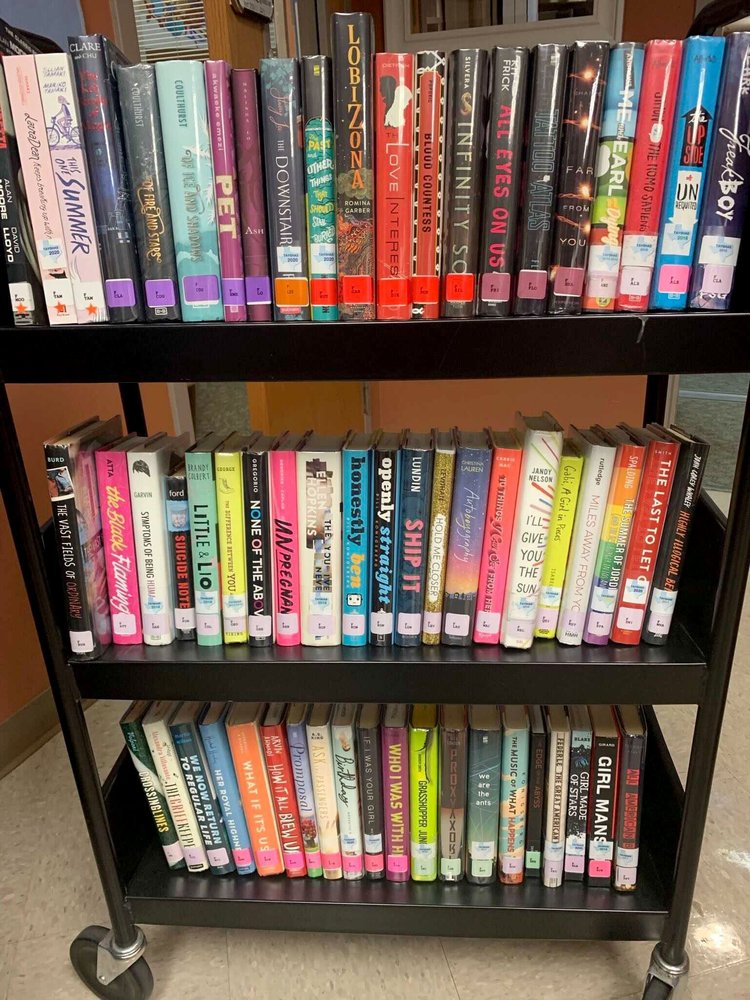
While a few books that are repeatedly challenged do generate enough media interest to lead to increased sales, the vast majority of challenged books don’t benefit. Book challenges have a chilling effect on teachers and librarians, who may seek to avoid controversy and personal harassment by quietly removing these books from their schools. That cart full of LGBTQ YA books includes novels that simply depict queer teens experiencing first crushes and having adventures. Removing them sends the message that merely existing as a queer teen is wrong. Meanwhile in Florida, House Bill 1557, officially known as the “Parental Rights in Education” bill, seeks to ban teachers from speaking about sexual orienation or gender identity in schools. This “Don’t Say Gay” bill just passed the Florida House and is now moving to the Florida Senate for a vote; Florida Gov. Ron DeSantis (Republican) has signaled his support for this law should it pass. If it does, Florida’s LGBTQ students will be under distinct threat in their schools. The Florida law is not alone. As of Feb. 25, 2022, 195 anti-LGBTQ bills have been proposed in dozens of states—including New York and Vermont. These laws attempt to outlaw health care for trans people; ban trans youth from sports and bathroom access; and prohibit LGBTQ, gender, and race-inclusive curriculum in schools. Make no mistake: these laws and book bans are trying to turn back the clock on our culture by enforcing white supremacy, pushing LGBTQ people back in the closet or worse, and rolling back women’s rights. These laws and book bans seek to prevent young people from learning about the world by denying them access to books that teach them about reality. Why is all this happening right now? Well, 2022 is an election year. These efforts, which are often bankrolled and organized by conservative organizations such as the Heritage Foundation and Moms for Liberty, aim to whip up support among Republicans during primary season, which is about to begin. I live in a blue state in a liberal community, but last week I realized that doesn’t mean that my community is exempt from these tactics. A resident in Waltham, MA, only about five miles from my house, recently challenged two LGBTQ books for “explicit content.” The community rallied in support of those books (This Book Is Gay by Juno Dawson and Gender Queer by Maia Kobabe), and the school committee rejected the challenge. This news reminded me yet again that it’s so important for all of us, no matter where we are, to educate ourselves about our local school boards. As they say, all politics are local, and school boards’ decisions have far-reaching consequences because they impact the minds—and lives—of young people. I urge you to take fifteen minutes and look up your own school board and election schedule, so that you can be ready to vote in your community. If it seems weird that I’m writing this in March, I just looked up my own local school board, and their terms end in April, when my town has a local election. Many school boards hold elections in April and November, so check yours to be ready. Over the last few years, it’s become very clear that authoritarianism is on the rise around the world, and democracy is declining—even in the U.S. These book bans and anti-LGBTQ laws are the local expression of this trend. If you support the liberation of all people and the freedom to be human, it’s important that we express that support at the ballot box. More ResourcesKelly Jensen has been reporting on book challenges across the country every week at Book Riot. Here’s her most recent roundup, which includes this form where you can share the details about your local school board. GLAAD’s media guide about reporting on book challenges includes links to data and references about censorship. Here is PEN America’s guide to educational gag orders.
|